
一、 Product introduction
1.1 Definition of soil stabilizer
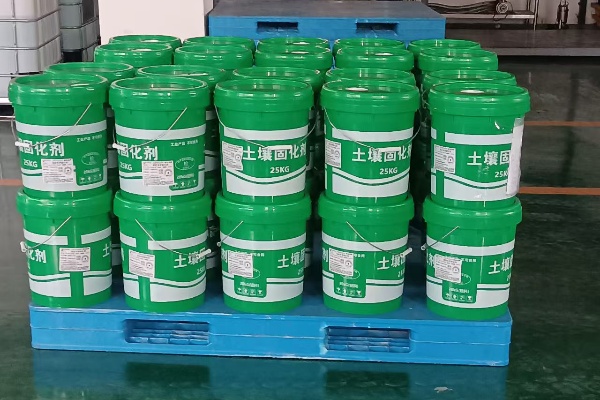
Soil solidifier is a new type of environmentally friendly building material that directly acts on different types of soil materials, solidifying the soil in place into a dense, uniform, high-strength and durable ecological solidified soil layer.
Ecological solidified soil is a semi-rigid material formed by solidifying soil with soil solidifier, a new type of engineering material. Compared with commonly used inorganic binding and stabilizing materials, ecological solidified soil can realize on-site material acquisition, featuring convenient construction, short construction period, low cost, and excellent road performance indicators. Within a certain range, it can replace commonly used gravel and crushed stones, reduce the dosage of inorganic binding materials such as cement and lime, thereby lowering project costs, saving resources and energy, and being conducive to ecological environmental protection. This technology is applicable to the construction of ecological solidified soil subbases, base courses and pavements for various purposes, as well as wall construction and restoration in newly-built and reconstructed highway projects, and has broad application prospects in municipal, transportation, water conservancy, foundation treatment and other projects.
1.2 Classification of soil stabilizer
In CJJ/T286-2018 Technical Standard for the Application of Soil Solidifying Agent, the soil solidification agent is divided into Class A soil solidification agent and Class B soil solidification agent.
Type A soil solidifier: An admixture that, after being added to the soil, improves the engineering performance of the base soil through physical or chemical reactions with cement (or lime and other cementitious materials), soil, water, and air. It is in the form of powder or liquid.
Type B soil solidifier: An admixture that, after being added to the soil, improves the engineering performance of the base soil through physical or chemical reactions with soil, water, and air. It can be used alone without adding cement (or lime and other cementitious materials) and is in the form of powder or liquid.
二、 Physical and chemical properties
Form:Liquid、granule、powder or paste Solubility: Soluble in water
Type: Ionic polymer type biological enzyme type Safety: Ecological and environmental protection
三、 Action mechanism
The working principle of ecological solidified soil is to reduce the surface current energy of soil micelles and fix a large amount of free water in the soil in the form of crystal water. After the soil solidifier is mixed with the soil, it changes the engineering properties of the soil through a series of physical and chemical reactions: the particles tend to agglomerate, the electrolyte concentration increases, and the volume expands to further fill the soil pores. Under compaction, an overall structure is formed, making the solidified soil easy to compact and stabilize, achieving a compaction degree that cannot be achieved by conventional methods. It improves its performance such as strength, compactness, rebound modulus, deflection value, CBR, shear strength, and impermeability coefficient, so as to meet the requirements of road performance indicators.
四、 Adaptability and scope of use
Soil solidifier can be applied to various types of soil, such as clay, silty clay, silt, sand, slag, coal gangue, construction waste, solid waste, and mud. Based on different soil types and design requirements, different solidification schemes are developed by adjusting the material ratio.
1. Construction of roadbed and road
Hardening of the subgrade, base or water stable layer of highways; Hardening of the base and sub base layers of roads of grade one and below; Hardening of the base and surface layers of simple or temporary roads; Functional ecological roads such as parks, forest areas, scenic spots, mountainous areas, or planting areas are solidified.
2. Ground hardening
Hardening treatment of parking lots, roads, sun drying areas, material storage areas, cargo storage areas, drilling well sites, production and processing areas, and other sites.
3. Rammed earth wall, plastered mud wall
Vegetables, flowers, and breeding greenhouses; Construction or restoration of ancient city walls; Construction of residential earth walls, etc.
4. Production of unburned bricks and imitation stone bricks
After thoroughly mixing different types of soil materials with soil solidifier, supplemented with other hydraulic materials or aggregates, they are directly pressed by a brick press.
5. Slope and anti-seepage site solidification
Slope solidification such as mountain slopes, ditches, and rivers; Anti seepage site, pit solidification treatment, etc.
6. Planting soil solidification
Solidify sludge, silt, and mud before use as planting soil.
7. Soft soil and soft foundation solidification
Solidification of mud in rivers, ponds, lakes, and seas; Pile driving and drilling mud solidification; Oil sludge treatment and solidification, etc.
8. Backfilling and solidification of foundation pit
Backfilling and solidification of mines, fertilizer tank foundation pits, pipe galleries and trenches.
五、 Product advantages
1. Low cost: The cost of ecological solidified soil is lower than that of cement/lime-stabilized macadam. It saves a large amount of externally transported earthwork as well as the resulting transportation and processing costs, with a low comprehensive cost.
2. Fast construction speed: Ecological solidified soil can be opened to traffic after mixing, leveling, rolling, and curing. This improves social benefits, shortens the construction period, significantly reduces the comprehensive investment in road construction, and enhances economic benefits.
3. Strong integrity: After solidification, ecological solidified soil forms a dense whole. Under vehicle loads, the solidified soil bears force as a whole, evenly transferring the upper load to the base course, effectively improving the bearing capacity of the base course and thus extending its service life.
4. Prevention of reflection cracks: The good integrity makes the base course rarely crack, thereby eliminating the generation of reflection cracks.
5. Strong resistance to water and corrosion damage: The solidified soil reacts with the base course carrier soil to form a hydrophobic body. The material's own water damage resistance ensures the overall strong water damage resistance of the base course structure.
6. Small settlement: It has high later strength, which improves the bearing capacity of the base course material; uniform force reduces uneven settlement of the pavement and also significantly reduces the settlement of the base course.
7. Durable: Ecological solidified soil has strong flexural-tensile resistance, impermeability, frost heave resistance, and anti-frost boiling resistance. It can effectively treat the base surface, endowing the ground base course with good overall stability and elasticity, combining rigidity and flexibility.
六、Construction plan
6.1 Basic Requirements
6.1.1 Cementitious Materials
① Cement requirements: Implement the standard "GB 175-92 Portland Cement, Ordinary Portland Cement". Cements of the same grade, manufacturer, type, and production batch must not be mixed. The cement grade shall be 425 or above PO ordinary Portland cement. The initial setting time is required to be more than 3 hours, and the final setting time is about 6-10 hours.
② Lime requirements: Implement the standards "JC/T 479-92 Building Quicklime Powder" and "JC/T 481-92 Building Hydrated Lime Powder". Quicklime must be fully slaked in accordance with national regulations before use.
6.1.2 Water quality requirements: Meet the provisions of the current industry standard "Standard for Water Used in Concrete" JGJ63.
6.1.3 Construction thickness: According to relevant national standards, the compacted thickness of each layer is appropriately 15-20 centimeters (cm).
6.1.4 Dosage of cementitious materials: The dosage of cementitious materials generally accounts for about 5%-15% of the total soil quantity. It is specifically determined according to construction requirements and processes.
6.1.5 Dosage of Soil Solidifier
① Soil solidifier for compaction: Under normal circumstances, on-site construction is calculated based on 2 tons of solidified soil per cubic meter of compaction; specific construction can be calculated according to the compaction density.
Calculated by compacted volume: 0.5-1.0 kg per cubic meter; calculated by weight: about 0.025%-0.05% of the total amount of solidified soil.
② Soil solidifier for sealing layer: After curing is completed, spray the special soil solidifier for sealing layer on the surface of the solidified soil; dilute it with water in a certain proportion and spray it about 2 times. This achieves the effects of densification and enhancement, waterproofing and anti-seepage, wear resistance and anti-aging.
6.1.6 Moisture Determination Method
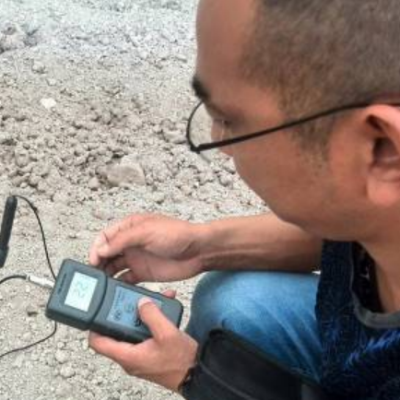
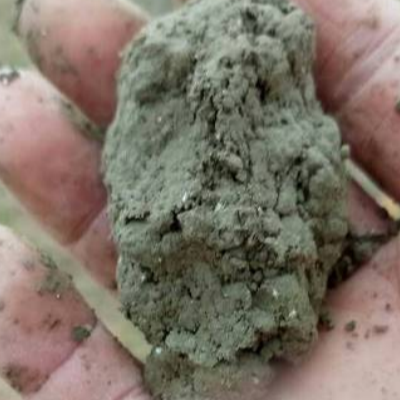
Figure 1 Determination using instruments Figure 2 Determination by traditional simple method
Moisture content can be determined using a soil moisture meter. The most commonly used is the traditional simple determination method: grab a handful of soil, hold it tightly, and the soil mass forms and does not disperse (holds together when squeezed); lift it one meter off the ground, let the soil mass fall freely, and the soil mass disperses evenly (breaks apart when dropped), indicating that the moisture content is around the optimal moisture content.
6.1.7 Material Dosage
Example illustration: For soil to be solidified with an area of 5 square meters, a compacted thickness of 20 centimeters, the compacted soil volume is 1 cubic meter, and the compaction density is calculated as 2 tons per cubic meter, the total soil quantity is 2 tons.
*Soil volume = Area × Compacted thickness = 5 square meters × 0.2 meters = 1 cubic meter
*Total soil quantity = Soil volume × Compaction density = 1 cubic meter × 2 tons/cubic meter = 2 tons;
*Dosage of cementitious materials (cement or lime) = Total solidified soil quantity × 10% = 2 × 10% = 0.2 tons;
*Dosage of soil solidifier for compaction = Total soil volume × Soil solidifier dosage = 1 cubic meter × 0.5 kg/cubic meter = 0.5 kg;
*Water consumption for diluting the solidifier = (Optimal moisture content × Total solidified soil quantity) − (Initial moisture content of soil × Total soil quantity)= 10% × (Soil quantity + Cement + Water added for dilution + Solidifier) − 3% × Total soil quantity
*Dilution ratio of sealing layer solidifier for pavement solidification: 1:3 - 1:20 (varies with different products).
Note: In the formula, the initial moisture content of the soil is calculated as 3%, and the optimal moisture content is calculated as 10%; the specific construction shall be based on the actual moisture content.
6.2 Construction tools and personnel configuration
Traditional road construction machinery can be used for construction, and the quantity and selection should be determined according to the actual situation
6.3Construction process (for reference only, please hand over the construction to a professional construction team and carry out in accordance with relevant national standards and regulations)
6.3.1 Introduction to construction technology
(1) Road-mixing Method: Follow the procedures specified in ①②③④⑤⑥⑦⑧.
(2) Factory-mixing Method: If lime is required, thoroughly mix hydrated lime with soil overnight for moistening; then blend with cement powder; spray diluted soil-curing agent to form ready-mixed cured soil. Wait until delivery to the site for paving before proceeding to step ⑥⑦⑧.
① Pre-treatment of Cured Soil Determine the length, width, and loose-laid thickness of the test section. If vegetation has been planted on the construction area, remove the top 20-30 cm of topsoil. For soil with high moisture content or excessive viscosity, perform sun-drying or pre-treatment to achieve a natural moisture content of around 5%.
② Subgrade Compaction and Backfilling with Loose Soil Determine the loose soil thickness based on the loose-laid coefficient. Use bulldozers to transport soil from both sides of the roadbed. Compact the subgrade while manually leveling it, then backfill the first layer of cured soil. Break up and level the soil.
③ Spread hydrated lime: Calculate the hydrated lime dosage, spread it evenly, and thoroughly mix it. It is recommended to moisten overnight for optimal mixing.
④ Spread PO42.5 cement: Calculate the required amount of PO42.5 cement, spread it evenly, and thoroughly mix it.
⑤ Soil Hardening Agent Dilution and Spraying, Material Soaking: Measure moisture content to determine the required amount of soil hardening agent and its dilution ratio. A water truck should be prepared to dilute the agent. Spray the diluted agent 1-2 coats until fully applied, then mechanically mix thoroughly.
⑥ Compaction and Curing: First compact and level with a tracked roller, then compact with a small roller. When compacting, follow these principles: "light-to-heavy pressure, slow-to-fast speed, sides-to-mid, static-to-vibrational." After compaction, cover with geotextile and regularly check moisture levels. Water to maintain surface moisture without pooling, with curing lasting at least 7 days.
⑦ Second Layer or Subsequent Layers: For multi-layer construction, after completing the first layer, flood the geotextile with water (recommended). Continue subsequent layers using the same method as the first.
⑧ Precautions: Implement phased construction based on cement's final setting time. Ensure all work is completed before final setting.
6.3.2
The specific construction process is as follows (the picture is the construction picture of other road sections, for reference only).
Two construction methods:
Road-mixing method: Follow the procedures specified in steps (1), (2), (3), (4), (5), (6), (7), (8), (9), and (10).
Factory-mixed method: If lime is required, thoroughly mix hydrated lime with soil overnight, then blend in cement powder. Spray diluted soil-curing agent to form a ready-made curing mixture. After transportation to the site for paving, proceed with construction following steps (1), (2), (3), (6), (7), (8), (9), and (10)。
(1) Deter mination of construction section survey
Measure using a total station or equivalent instruments through the coordinate method. Based on the designed roadbed width, lay out the roadbed boundary lines. To ensure effective compaction and slope stability, each side of the boundary lines should be extended by 20-40 cm. Technicians then precisely mark the level lines to determine the elevation of cross-sections, with design elevation markers established on the side walls. When performing level elevation control, the loose laying coefficient must be considered.
(2) Prepare soil and level
According to the earthwork required during the construction stage, the soil should be loosened and roughly leveled according to the measured height and width. The leveling method is generally used by manual and bulldozer. The soil with large particles should be screened in advance for standby.
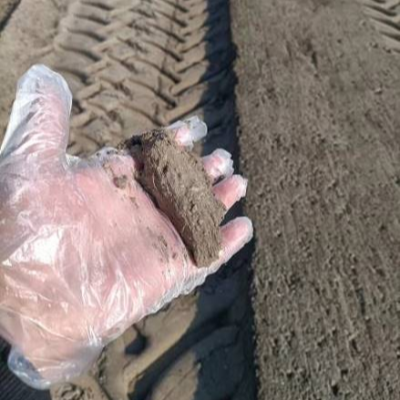
Prepare the soil and level it.
(3)Roadbed compaction, backfill with loose soil
According to the Panasonic coefficient, the thickness of the virtual soil is determined. The soil of the road section to be constructed is pushed by a bulldozer to both sides of the road, and the roadbed is compacted. While compaction is being done, the ground is manually leveled, and the first layer of soil to be cured is backfilled, crushed and leveled.
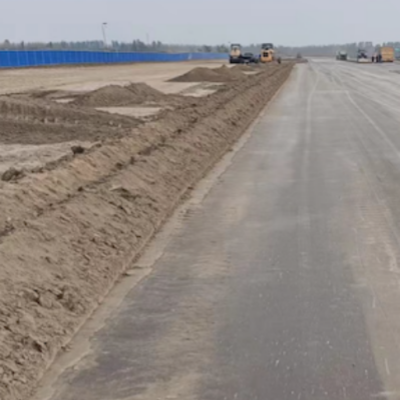
Bulldozing the roadbed compacted
(4)Spread cement or lime and mix
Spread lime or cement in evenly proportioned layers within designated grids, ensuring no gaps on the surface. Mix thoroughly to achieve a smooth surface. During material spreading, remove oversized particles and debris. For dry mixing, use a rotary tiller (or alternatively, cold recycling or road mixer). Small-scale applications may require manual mixing.
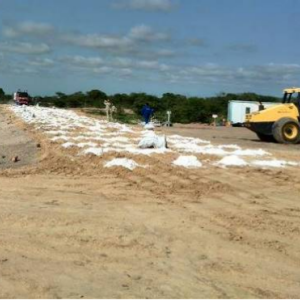
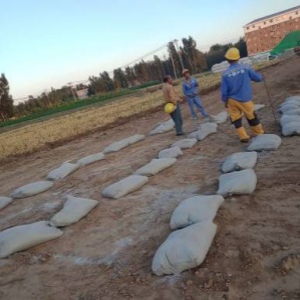
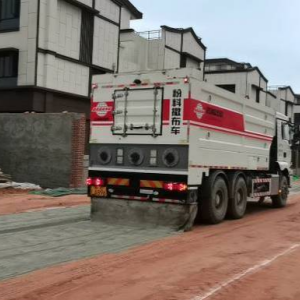
White lime or cement is spread by hand or machinery
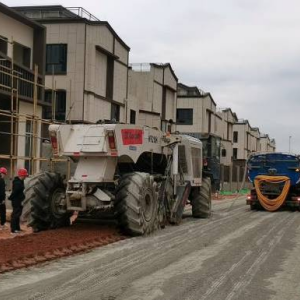
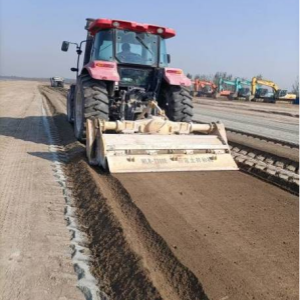
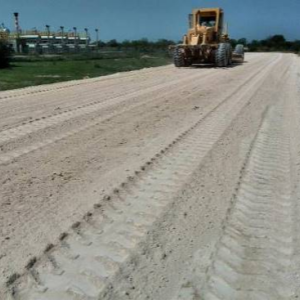
Mechanically mix lime or cement
(5)Spray curing agent and wet mix
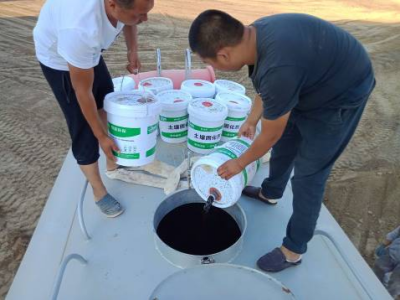
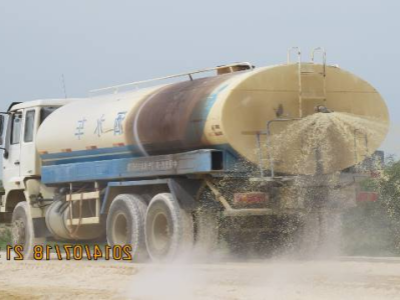
Dilute soil hardener in sprinkler truck Spray diluted curing agent
Select representative points to test the moisture content and accurately calculate the total amount of water needed for the work section. Dilute the curing agent according to the pre-calculated ratio. Spray the soil stabiliser in 2-3 applications, ensuring mechanical mixing is done at least twice to achieve a uniform colour.
(6) Initial compaction, leveling and rolling of solidified soil
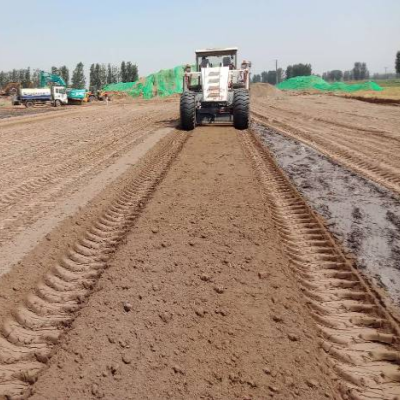
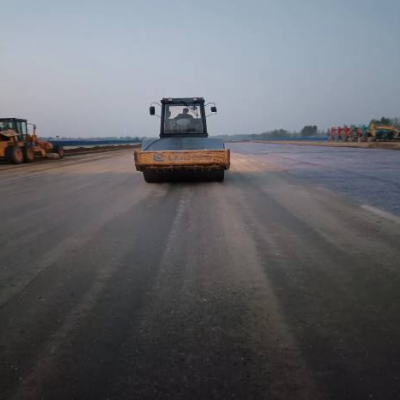
Initial compaction, leveling and rolling of solidified soil
After thoroughly blending the mix, it should be immediately pre-compacted with a bulldozer, followed by levelling with a grader. During the levelling process, for local low-lying areas, newly mixed material should be used for. It is essential to avoid making thin layer on smooth surfaces. Once the thickness for loose laying is determined, compaction should occur at optimal moisture content, with corresponding rolling plans developed according to the road width and roller axle spacing. The rolling operations should adhere to the principles of 'low to high, slow to fast, static to vibratory, weak vibration to strong vibration'.
It is required that the front and rear rollers cooperate with the construction, and the lap operation should be done in the similar road sections, and the running speed of the roller per hour should be controlled between 2-4km. If the large rolling machine cannot be compacted locally, small machinery or manual methods can be selected to compensate for the pressure. In order to avoid water evaporation and have a serious impact on the compaction effect, it is necessary to achieve the same day of paving and rolling.
(7) The second layer of construction
After the first layer is completed, the cover geotextile is watered and maintained, and the second layer is constructed according to the construction requirements
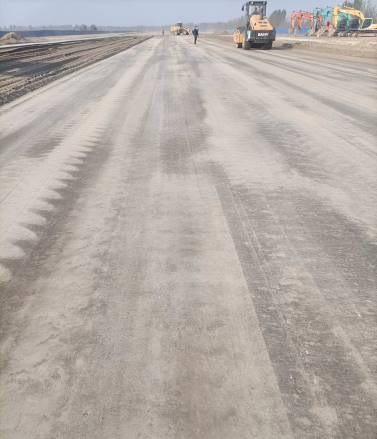
Compact the second layer
(8)Joint treatment (as required)
At the end of each day, the end of the roller is cut into a straight seam by hand. At the beginning of the next day's work, the transverse seam is first rolled horizontally. When rolling horizontally, the roller is placed on the forming layer first, and 20-30cm is extended to the new layer at a time until the width of the roller is placed on the new layer before longitudinal rolling.
(9) Health preservation and traffic control
After each compaction segment of the solidified soil layer passes density verification, traffic should be immediately halted. Geotextile covering and water curing must commence immediately to maintain pavement moisture, with curing lasting 7-14 days. Adjust curing duration according to temperature: minimum 7 days, 10 days in high temperatures, and 14 days during summer. When resuming traffic, initial passage may utilize geotextile for initial support.
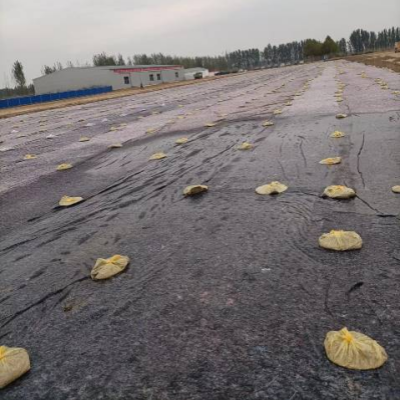
Geotextile water maintenance
(9) Spray the sealant
After the completion of engineering maintenance, the diluted sealant curing agent is sprayed to solidify the seal according to the pavement condition. Whether the roadbed should be treated with seal or not is determined according to the design requirements of construction, soil quality, season and climate.
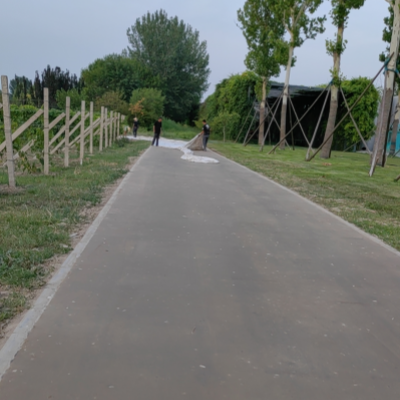
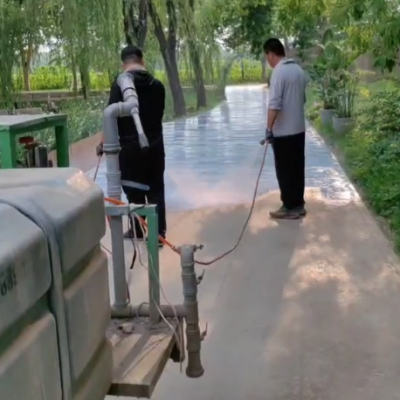
Spray sealant curing agent
七、 Benefit analysis
7.1 Economic benefit analysis
(1) Local materials: directly taking soil from the roadbed for construction eliminates the need for transport vehicles to carry sand, stone, water and other materials over long distances, replacing traditional road construction materials, which saves material costs, a significant amount of transportation costs and labour costs, and reduces expenses by about 10%-40% compared with traditional road construction materials and processes. It greatly diminishes the utilisation rate of equipment and vehicles, saving a substantial amount in equipment investment alone, and negates the need to add new equipment to the existing road construction tools, especially in areas with high transportation costs and vehicle expenses.(2) Very low dosage: the amount of soil hardener used is just a few tens of thousands of the mixture, and such a small quantity can achieve excellent road compression, water and frost resistance, with obvious benefits. Depending on the grade requirements and road soil conditions, the type of cementing material to be added is determined, and its strength can be greatly enhanced when used with suitable cementing materials.(3) Good water stability: It addresses the issue of water permeability, allowing the overall height of the roadbed to be reduced, which can save substantial amounts of labour, construction time, earthworks, sand and gravel, cement, lime, and other materials. After adding the curing agent, the road exhibits good waterproof properties, making it less likely to suffer damage during the rainy season, which extends the lifespan of the road and reduces maintenance time.
7.2 Environmental benefit
After use, the soil stabilizer will react with soil and cementitious materials in organic and inorganic physical and chemical reactions, and will not cause pollution and toxicity to the soil; After the road is abandoned, it can be returned to farmland and cultivated again, which can effectively solve the environmental pollution caused by the mining of traditional road construction materials and the waste treatment problems after the road is abandoned.
7.3 Overall benefit analysis
From the above overall situation, the use of soil curing agent to transform the existing road can receive very good social and economic benefits, and its associated benefits are also very huge.
八、Some construction cases at home and abroad
8.1 Curing of base course surface course of different grades of roads
8.1.1 Highway —— Roadbed curing
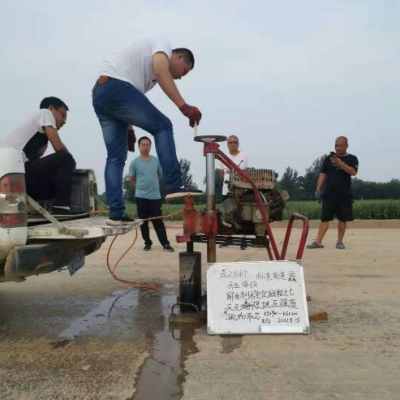
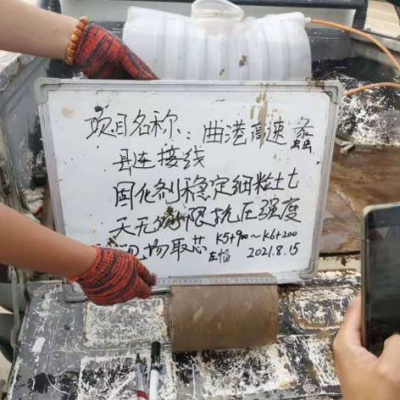
Construction of connecting line foundation in Li County of Baoding
——Qugang Expressway in Hebei Province
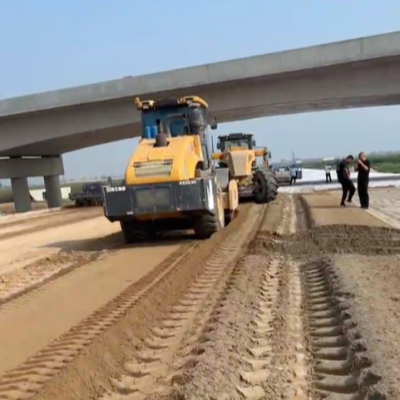
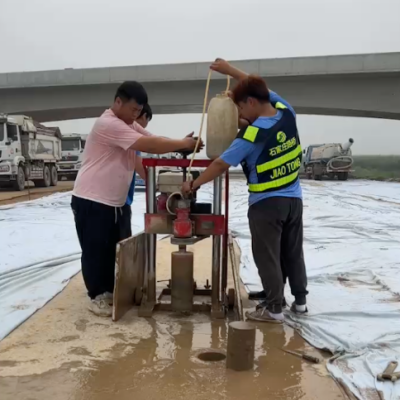
Construction of Water Stable Roadbed for Shijiazhuang Shiheng Expressway
in Hebei Provi
8.1.2 Urban secondary roads and branches - solidification of water stable layer
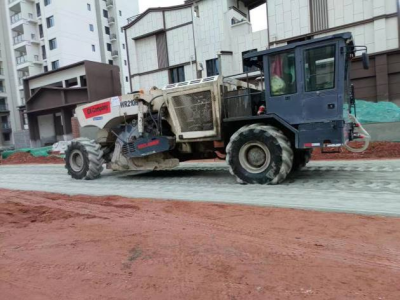
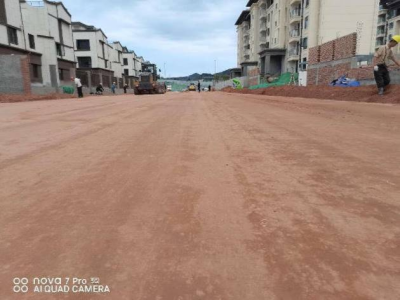
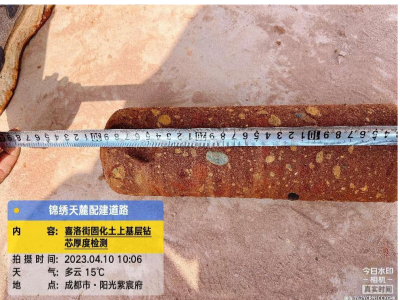
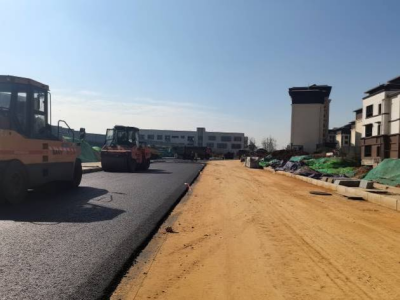
Chengdu, Sichuan - Water stable layer - Construction of solidified soil
8.1.3 Urban expressways and trunk roads - subgrade consolidation
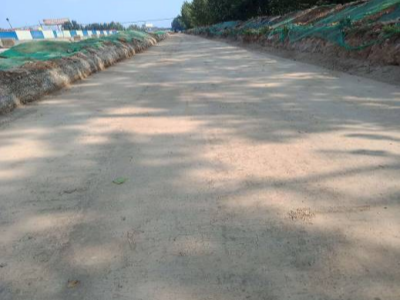
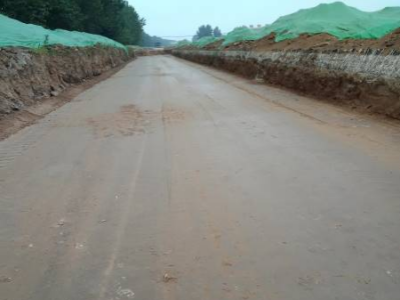
Subgrade construction of Jining-105 National Highway in Shandong Provi
8.1.4 Urban secondary trunk and branch roads - subgrade consolidation
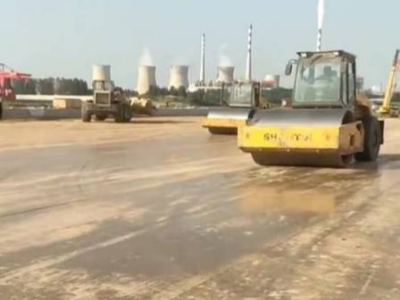
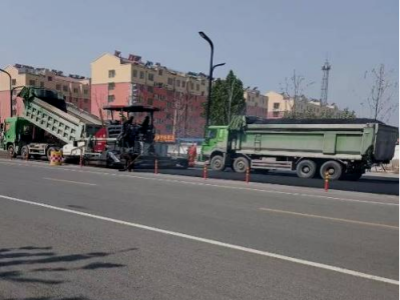
Jining, Shandong Province - subgrade construction of Guihua 1st Road
九、 Purchase instructions
Dear customer friend:
In order for you to better use our products and achieve better curing effects, please carefully read the following text before shipping product samples and purchasing products:
9.1 Explanation 1
All construction techniques, processes, equipment, methods, etc. related to non company products mentioned in this manual are only based on our experience and are not recommended or suggested; The specific measures are ultimately made by the material recommender, purchaser, construction party, or party A.
Our company is only responsible for the quality of our products themselves and is not responsible for any other processes or results beyond this. The final quality of its construction is closely related to the construction process. The material recommender, purchaser, construction party, or party A should make the final choice based on objective circumstances.
Please consult with our experienced technical personnel in advance to understand the material properties, dosage, dilution method, addition, and functional properties of the solidified soil, and determine the purchase intention. Please send soil samples to us for soil analysis and formula screening before purchasing.
9.2 Explanation 2
Soil in-situ solidification is a soil hardening technology that meets national industry standards. It meets specific industry design requirements with low solidification material costs and good environmental applicability, and has been widely promoted and applied under specific construction requirements. The solidified soil has outstanding effects when used as the base layer of asphalt pavement and concrete pavement. But when it comes to the use of road surface layers, they cannot be compared with asphalt pavement and concrete pavement surface layers. The two do not belong to the same application scenario and working condition, with significant differences in standards, construction costs, and usage effects.
When using the surface layer, be sure to do a good job in drainage design and timely drainage work; If subjected to long-term pressure, water accumulation, and cyclic freeze-thaw cycles, surface pulverization may occur, which is a normal phenomenon. The company does not recommend direct application to long-term high-strength pressure bearing surface layers, and prioritizes their use as base layers. It is best to cover the surface layer with a hard layer. When selecting this technology, please conduct a thorough analysis of the operating conditions.
Curing agent is an additive used in the construction of solidified soil. There are many key factors for successful solidification, including standard process design before construction, soil quality, cementitious materials, mechanical standardization, human operation, climate, and maintenance and usage methods after completion.
Please first understand the properties of solidified soil before deciding whether to purchase or carry out solidified soil construction.
The final interpretation of the content of this manual belongs to the company.
This is to clarify that!
Shandong Sinovis EP Tech Co., Ltd
Jining, China
| Previous:Enzyme based soil stabilizer | Next:Enzyme based soil stabilizer |