
In-situ solidification of soil solidifiers
Ready-mixed flow solidified soil
一、Overview
Pre mixed fluidized solidified soil is a new type of building material that fully utilizes the foundation soil after excavation of fertilizer tanks, foundation pits, or waste. After adding a certain proportion of soil solidification agent, cement (or no), and water, it is thoroughly mixed and evenly through specific processes and machinery to form a pumpable and flowable reinforcement material, which is used for backfilling and pouring various fertilizer tanks, foundation pits, pipe trenches, pipe galleries, and mine tunnels.
The slump of the pre mixed fluidized solidified soil after uniform mixing is 150mm-240mm (backfill of fertilizer tank), and the expansion is greater than 400mm. The strength of pre mixed fluidized solidified soil after hardening shall not be less than 0.4MPa. Add curing agent according to soil quality and design requirements during mixing. Pre mixed fluidized solidified soil can adjust its strength and flowability by adjusting its mix proportion according to the requirements of use. The backfilling of the fertilizer tank in the pre mixed fluidized solidified soil area shall be carried out in layers. The thickness of the first layer of pouring shall not exceed 0.5m, and the thickness of each pouring shall not exceed 1.5m. The height difference between adjacent areas of pouring shall not exceed 1m.
Pre mixed fluidized solidified soil has high strength and flowability suitable for pumping construction. It not only has fast construction speed, but also forms a pre mixed fluidized solidified soil with high strength, controllable quality, low cost, wide applicability, and environmental friendliness. It is a very good construction material.
二、Scope of application
1、After the soil is taken out from the ground by special equipment, it is premixed by ground machinery to form ready-mixed fluid-solidified soil slurry, and at the same time, the ready-mixed fluid-solidified soil slurry is poured or pressed into the hole to form ready-mixed fluid-solidified soil pile. It is used as an reinforcement of composite foundations, or solidified fluid-shaped soil, and also forms a ready-mixed fluid-solidified soil pile wall structure for water curtain. The ready-mixed flow solidified soil pile constructed by this process has the characteristics of uniform mixing, high strength and high utilization rate of curing agent. It can also be used as a replacement material for foundation replacement.
2、Ready-mixed fluid-cured soil can be used as a construction cushion material or as a cured ground because it has working properties similar to concrete.
3、Ready-mixed liquid solidified soil has a certain strength and fluidity, can be used as a base material for municipal roads or construction roads, the ready-mixed liquid solidified soil has self-tightness, no need to use large machinery for rolling treatment during construction, saving construction costs.
4、The backfilling of the fertilizer tank after the completion of deep foundation construction has always been the control focus and difficulty of construction, and the use of ready-mixed liquid solidified soil can solve this problem by using its fluidity and strength.
三、Backfill features
Ready-mixed fluid-solidified soil for trench backfilling has the following advantages:
1、Ready-mixed flowable solidified soil features high early strength, short solidification time and fast construction progress.
According to the current backfilling requirements, it only takes about 24 hours to reach the intensity of the next step of construction. This feature ensures the continuous backfilling and the removal of the supports in the excavation with the backfill. The working surface required for backfilling the foundation tank of ready-mixed liquid solidified soil is small, and multiple sections can be constructed at the same time, with less construction speed and process links, and short construction period.
2、Ready-mixed fluid-cured soil has strong fluidity and self-tightness
The construction quality can be controlled, and the fluidity of ready-mixed fluidized solidified soil can fill all voids in narrow spaces and special-shaped structural spaces. Ready-mixed fluid-solidified soil has the characteristics of self-tightness, and there is no need to use large-scale tamping and rolling equipment during construction, which reduces the impact and damage of construction on the structural layer. Ready-mixed fluid-solidified soil does not cause damage to the waterproof layer when pouring, so it is necessary to protect the waterproof wall of the underground structure of the backfill trench when the method of compacting backfilling is not adopted, which not only saves the construction cost but also solves the problem that the protection construction cannot be carried out in some narrow spaces. At the same time, the ready-mixed fluid-solidified soil adopts the construction methods of mechanical ready-mixing, centralized mixing and on-site pouring, and the ready-mixed fluid-solidified soil is evenly mixed and the quality is stable, and the on-site pouring is less affected by the on-site conditions and the factors of construction personnel. Batch ready-mixed fluidized solidified soil materials are representative of sampling.
3、Ready-mixed fluid-cured soil is impermeable
Solidified soil is the mechanism of filling and consolidating soil particles with curing agent, so cured soil has impermeability. This property not only prevents groundwater from damaging the solidified soil itself, but also tightly integrates with the base layer to prevent surface water from seeping along the interface between the structure and the backfill soil.
4、Ready-mixed liquid solidified soil has the characteristics of economy and environmental protection
Ready-mixed fluid-solidified soil backfill foundation groove can solve the problems of high soil requirements, small working surface, difficult compaction, unstable tamping quality, poor combination with the interface with the basic structure, dry construction can not guarantee subsidence after contact with water, etc., and its effect of backfilling in the foundation groove can achieve the effect of plain concrete. However, its cost is much lower than using concrete backfill. At the same time, centralized mixing is adopted during construction, and the material is liquid during on-site pouring and will not produce dust pollution, which is green and environmentally friendly.
四、Introduction of curing agent
4.1、Product introduction
4.1.1 Soil curing agent
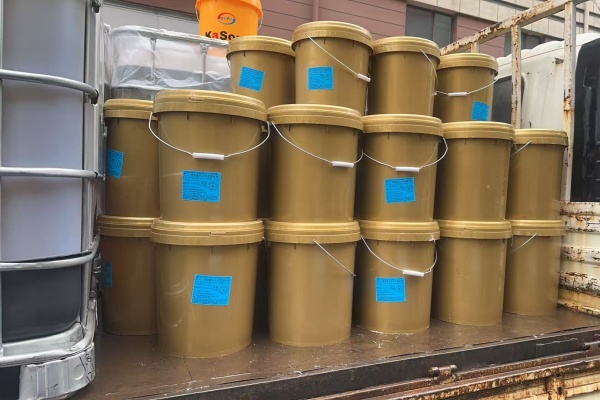
Soil curing agent is a new type of environmentally friendly road construction material, which directly acts on the soil to solidify the soil in situ. With soil as the main raw material, it has very good universality to all kinds of soil. In the curing process of using soil as the main material, aggregates such as sand and stone can also be added at the same time. Compounding soil, curing additives can be used in the construction of fertilizer tanks, foundation pits or abandoned foundations. It can be widely used in the construction of roadbed of various high-standard roads, such as municipal roads, highways, ordinary roads, airport runways, etc., and can be directly solidified for factory roads, sidewalks, rural roads, etc. that are not high, without covering other hard layers. It is also very suitable for the construction of earthen walls.
4.2 Scope of use
Ready-mixed fluid-solidified soil filling project can be used for foundation pit fertilizer tank backfill, house core soil backfill, pipe gallery pipe trench backfill, mine pit and underground goaf backfill.
4.3Product suitability
Soil hardeners can be applied to a wide variety of soil types. Different curing schemes can be developed by adjusting the formulation of the curing agent.
4.4 Mechanism of action
After the use of soil curing agent, the soil glue surface current energy reduction, a large amount of free water in the soil in the form of crystal water fixed, curing agent and soil mixed through a series of physical and chemical reactions to change the engineering properties of the soil, particles tend to agglomerate, electrolyte concentration enhanced, volume expansion and further fill soil pores, form an overall structure, make the solidified soil dense and stable, improve strength and impermeability, so as to meet the technical indicators of solidified soil.
五、Solidified soil construction
1、Construction preparation
1.1 Before construction, the construction plan should be determined and the construction organization design should be prepared.
1.2 According to the construction organization design, the construction equipment should be organized to enter the site, and the installation, commissioning and calibration work should be done.
1.3 According to the raw material use plan, organize the entry and inspection of raw materials.
① Soil selection: clay, silty clay, sand silt, etc. are preferred, the organic matter content is not more than 5%, and the particle size is not more than 50mm. Untreated contaminated soil shall not be used as raw materials for solidified soil.
② Curing agent selection: Soil curing agent is divided into class B curing agent (used alone) and class A curing agent (used with cement), according to the construction design requirements, determine the type and amount of curing agent.
③ Water: Non-polluted water source.
1.4 Remove stagnant water and organic debris from trenches and floors before filling。
1.5 Mix ratio design
The mix ratio of solidified soil should be determined by trial matching, but experienced areas can develop empirical mix ratios for different strengths based on local soil properties.
3.1 Pouring equipment includes mixing equipment and pouring equipment, and shall comply with the following regulations:
1) The production capacity and equipment performance of mixing and pouring equipment should meet the requirements of continuous operation;
2) The mixing equipment should have the functions of batching and measuring materials such as soil, soil curing agent, cement and water;
3)The measurement deviation of the mixing equipment should comply with the relevant regulations.
3.2 The soil curing agent and water should be stirred into a curing agent slurry first.
3.3 The mixture should be stirred using special machinery, and the stirring time should not be less than 2 minutes, subject to uniform stirring and workability to meet the requirements.
4、Pouring
4.1Solidified soil can be transported by tanker, pumped or chute-poured.
4.2 The time from stirring the solidified soil to the completion of pouring should not exceed 3 hours.
4.3 The solidified soil should be poured in layers and blocks, and the pouring operation should be carried out symmetrically, and the pouring height difference should not be greater than 1m. The first pouring should not exceed 0.5m.
4.4 The upper pouring operation should be carried out after the final setting of the lower layer.
4.5 When pouring, in case of heavy rain or continuous light rain, the surface of the unhardened filling body should be covered.
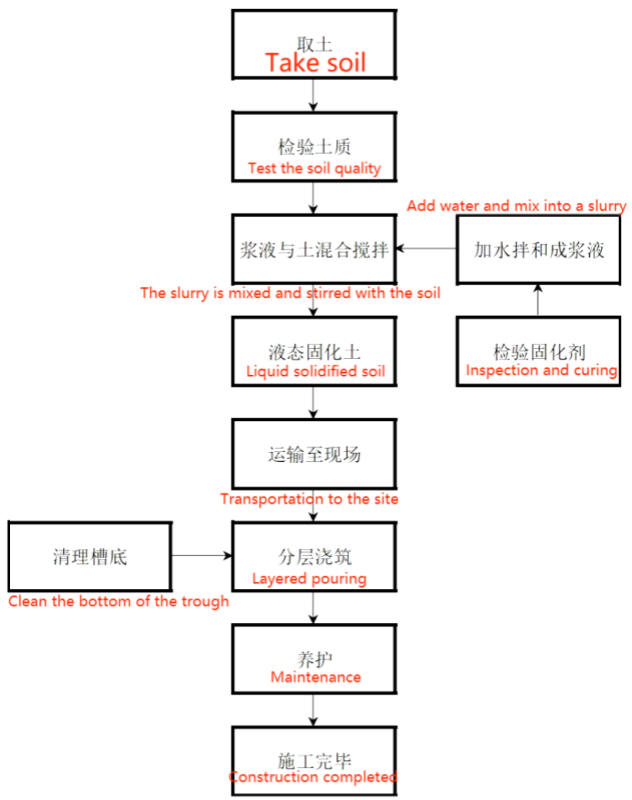
Construction process of ready-mixed liquid solidified soil
5、Maintenance
5.1 After the pouring is completed, cover maintenance should be carried out immediately to prevent water loss, during which mechanical pedestrians are strictly prohibited from passing.
5.2 After pouring the top layer of the filling body, the surface of the filling body should be covered with plastic film or geotextile moisturizing and curing. The curing time is not less than 7 days.
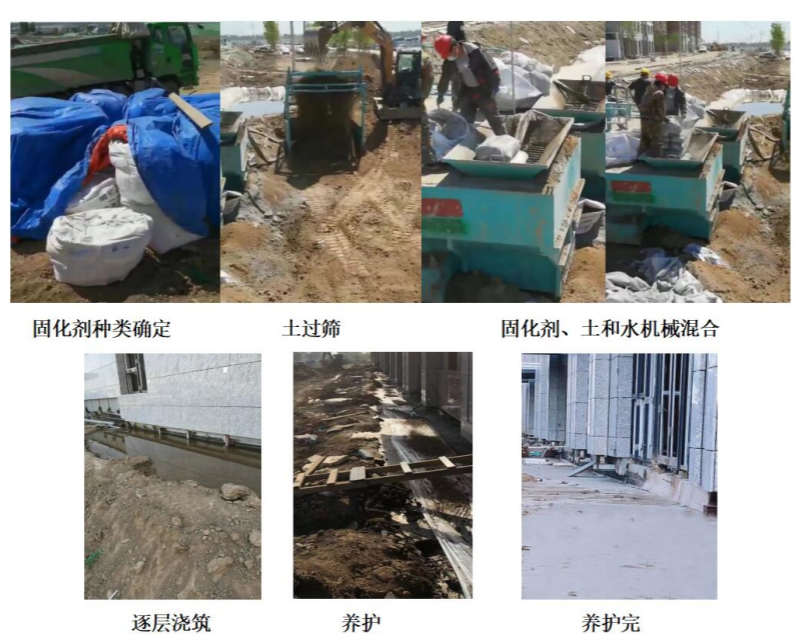
Ready-mixed liquid solidified soil construction case process display
Notes:
① Raw soil preparation includes soil quantity measurement and soil quality testing, as well as the presence of construction waste in the solidified soil after mixing.
② The cleaning of the foundation tank should ensure that there can be no garbage and stagnant water in the foundation tank, the stagnant water in the foundation tank should be cleaned up, the base tank should not be too dry, and the base tank should be sprinkled with water to wet.
③ Measure the pay-off release level, control line of layered pouring, and the position line of segmented formwork support.
6、Quality control measures and quality standards
6.1 Quality control measures
1、Before backfilling, the fertilizer tank must be cleaned to remove garbage and stagnant water. Strictly check the use of curing agent and other raw materials, the quality department controls and accepts the mixed soil, the strength of the cured soil meets the design requirements of the drawings, and it is resolutely not used if it is unqualified. Soil and curing agent and water mixing should be strictly measured.
2、When the fertilizer tank is backfilled construction, when the continuous pouring is less than 400m3, a group of test pieces should be prepared every 200m3, and when the continuous pouring is greater than 400m3, a group of test pieces should be prepared every 400m3. After each layer of backfill completes the final setting of the solidified soil, the upper layer of solidified soil can be backfilled. And in the construction test record, indicate the matching ratio, test date, number of floors (number of steps), location, signature of the test personnel, etc.
3、Construction is carried out in strict accordance with the requirements of construction plan, technical disclosure and construction specifications. Night construction, strengthen lighting, prevent over-thickening, or inaccurate matching ratio.
4、Strengthen the control of the construction process. The working surface of the construction during the rainy period should not be too large, and there should be a planned section-by-section, piece-by-piece phased completion, mixing, transportation, backfilling and other processes should be carried out continuously, and the weather changes should be grasped at any time.
4、After the fertilizer tank is backfilled, cover it in time to prevent sun and rain before final coagulation. In the case of weather prediction, the completed layer must be covered with plastic film in time to prevent rain from getting wet. The filled soil layer is flooded, and the sludge should be removed before the next process can be carried out.
6、During the rainy period, the original drainage system in the construction site should be regularly inspected, dredged, and drainage facilities should be added accordingly if necessary to ensure smooth drainage. The power distribution facilities in the construction site must have rainproof measures, and special personnel are responsible for inspection and maintenance.
6.2 Quality standards
6.2.1 Raw materials
1. Master project
The soil curing agent entering the site must be accepted according to the batch, such as its variety, grade, packaging or bulk bin number, and factory date. And its strength and coagulation time are retested, and a retest report is issued.
Inspection quantity: the same manufacturer, the same batch number and continuous entry of curing agent, every 500 tons for a batch, when less than the above quantity, also according to a batch.
2.General items
(1)The use of drinking water as construction water for solidified soil mixing can not be tested.
(2) Number of inspection of organic matter content and water content with mixed soil: once per 1000m3.
6.2.2Solidify the soil
1. Master project
The mix ratio of solidified soil used for the first time should be identified at the open, and its raw materials, strength, slump, etc. should meet the requirements of the design mix ratio.
Number of inspections: Curing inspections of the same mix ratio should not be less than once.
Inspection method: check the opening identification data and strength test report.
2. General items
The slump of the solidified soil mixture should meet the design requirements.
Inspection quantity: For solidified soil with the same mix ratio, sampling should comply with the following regulations:
(1)When mixing 200m3, sampling should not be less than once;
(2)When the mixing is less than 200m3 per work shift, sampling shall not be less than once;
(3)Each segment and layer shall not be sampled less than once.
Inspection method: check the slump sampling inspection record.
6.2.3 Solidified soil construction
1. Master project
The strength of the solidified soil must meet the design requirements. The specimen used to test the strength of the solidified soil should be drawn immediately at the pouring site. The specimen adopts a cubic test mold with dimensions of 100mm× 100mm × 100mm.
Inspection quantity: The number of preparation groups of solidified soil specimens should comply with the following regulations:
(1)At least one set of standard maintenance specimens is retained for each filling sample, and the number of retention groups of the same condition maintenance specimens is determined according to the needs of the site;
(2)When the same mix ratio is continuously poured less than 400m3, a set of test pieces should be prepared every 200m3;
(3)When the same mix ratio is continuously poured greater than 400m3, a set of test pieces should be prepared every 400m3.
Inspection method: check construction records and strength test reports.
2. General items
Remove debris and stagnant water in the tank before backfilling.
Number of inspections: All inspections.
Inspection method: on-site observation.
(2)After the solidified soil is poured, it should be maintained in time.
Number of inspections: All inspections.
(3) After filling the top layer, the elevation should be checked. The allowable error ± 20mm.
Number of inspections: 3 points per 100m2 or 1 point per 10m2.
Inspection method: use level to measure the elevation.
7、Safety precautions
7.1The pouring operation must be commanded by a special person and the division of labor must be clear.
7.2 The backfilling of solidified soil should be firmly connected between the chute and the barrel segment, and the operation part should have a protective railing, and it is not allowed to stand directly on the chute for operation.
7.3 A cordon is set up in the earthwork area to prohibit non-workers from entering.
7.4 Do a good job in monitoring the slope and foundation of the foundation pit, report the abnormal situation to the project department in time, and it is strictly forbidden to deal with it privately. 7.5 In the working range of the excavator, no other operations are allowed, personnel are as far away from the machine as possible, and if necessary, the operator is notified before approaching.
7.6 Night construction requires certain lighting equipment to ensure that the operator can see the surrounding things clearly and avoid safety accidents, and the operators need to wear reflective vests.
7.7 The stopping points of excavators and trucks must leave a sufficient safety distance to prevent ramp stops and stops.
8、 Environmental measures
8.1 Strengthen the control of dust during construction, and sprinkle water in time on sunny days to prevent dust from flying.
8.2 The completed part is covered with green non-woven fabric in time.
8.3 The muck that fell on the construction road was cleaned up in time.
8.4 Construction vehicles leaving the construction site must first be washed by the car wash before entering the municipal road.
8.5 Workers enter the construction area to work in uniform work clothes, and wear labor protection supplies according to specifications.
8.6 Adhere to the civilized construction inspection system, and conduct random inspections of civilized construction from time to time.
六、Ready-mixed liquid solidified soil case
Construction of ready-mixed liquid solidified soil such as fertilizer trough, foundation pit, mine cave, pipe gallery pipe trench, and house core soil
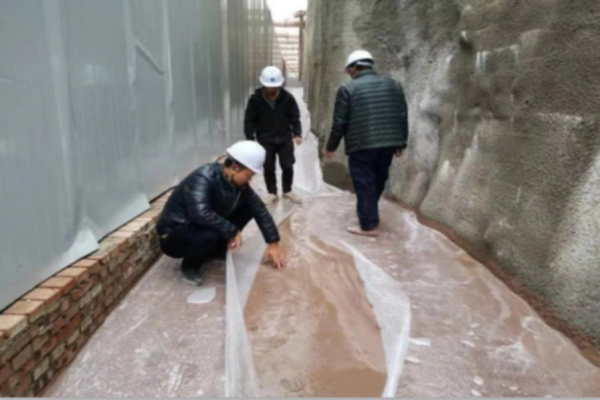
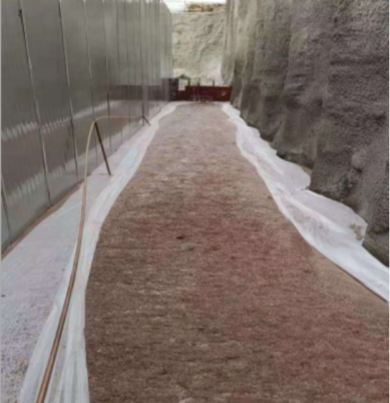
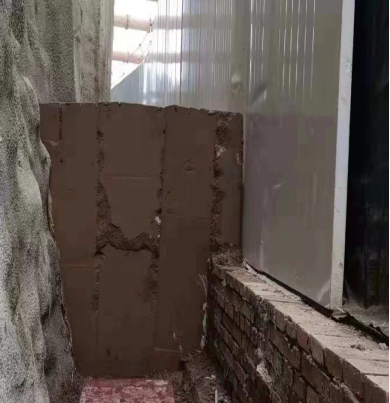
Sichuan. Jianyang-Tianfu International Airport subway and pipe gallery construction
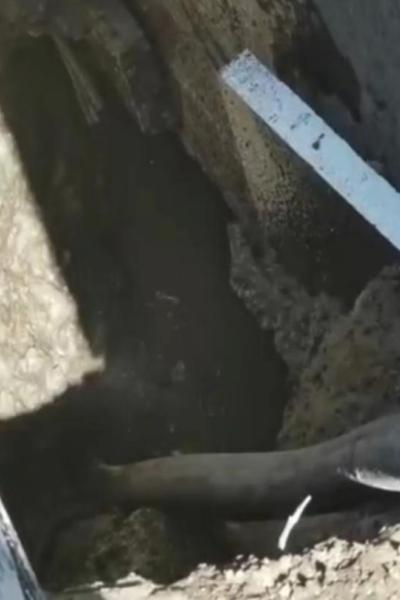
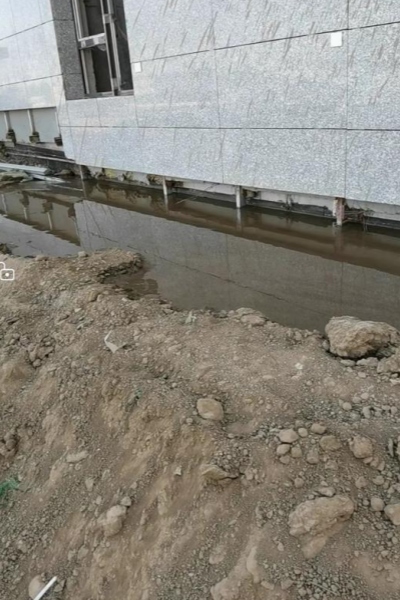
Pour layer by layer
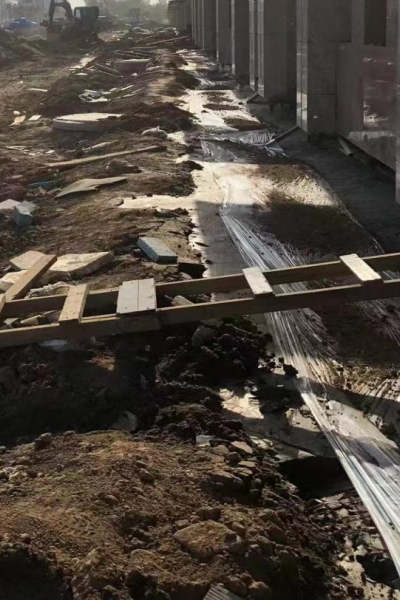
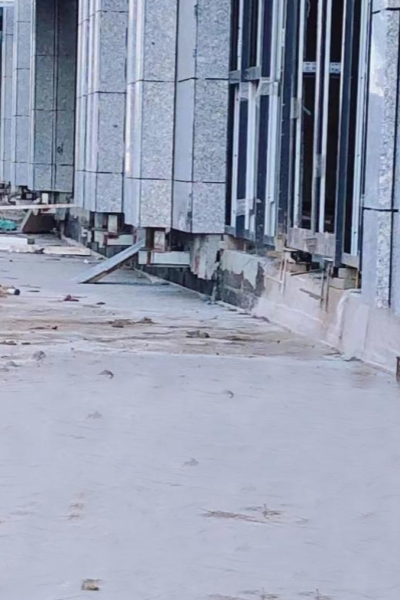
Lamination curing Conservation completed
Hebei. Baoding - self-compacting ready-mixed liquid solidified soil
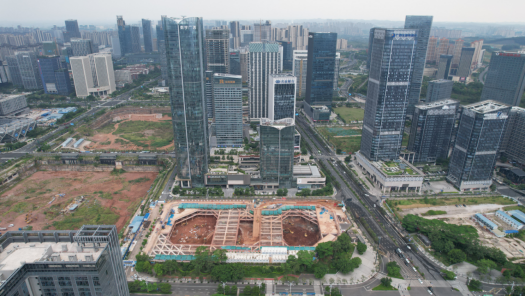
Shenzhen – Backfilling of the outdoor wall of the basement of the Bank of China Financial Center
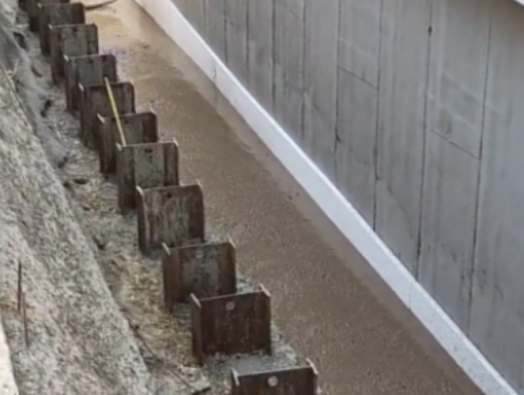
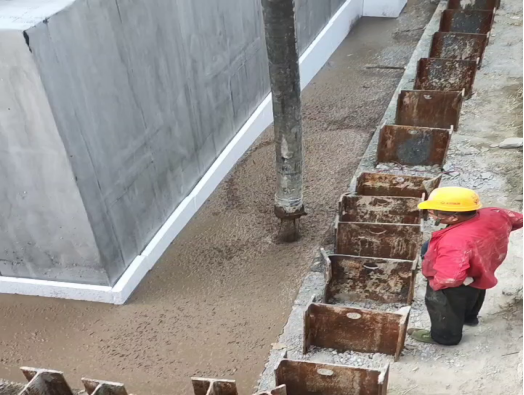
Hubei. Wuhan - Binjiang F3 plot fertilizer trough backfill
Purchase Instructions
Dear Customers,
For your optimal use of our products and to achieve the best solidification effect, please read the following notes carefully before the delivery of product samples and your purchase:
Note 1
All construction technologies, processes, equipment and methods involving non-company products mentioned in this manual are merely a presentation of our experience and do not constitute any recommendation or advice. The specific measures shall be ultimately determined by the material recommender, purchaser, constructor or Party A.
Our company shall only be responsible for the quality of our own products, and shall not be liable for any other processes or results beyond this. The final construction quality is highly dependent on the construction process. We request the material recommender, purchaser, constructor or Party A to make the final decision based on objective actualities.
Please consult our experienced technical staff in advance to understand the material properties, dosage, dilution and addition methods, as well as the functional properties of solidified soil to confirm your purchase intention. Please send soil samples to our company for soil quality analysis and formula screening prior to procurement.
Note 2
In-situ soil solidification is a soil hardening technology that complies with national industrial standards. With low costs of solidification materials and excellent environmental applicability that upholds the vision of "green mountains and clear waters", it well meets the specific design requirements of the industry and has been widely promoted and applied under specific construction conditions. Solidified soil delivers outstanding performance when used as the base layer for asphalt and concrete pavements. However, it cannot be compared with asphalt or concrete surface layers when applied as a road surface layer, as they fall under different application scenarios and working conditions with significant differences in standards, construction costs and service effects.
If used as a surface layer, proper drainage design and timely drainage measures must be implemented. Surface pulverization may occur due to long-term pressure bearing, water accumulation, cyclic freeze-thaw and other factors, which is a normal phenomenon. Our company does not recommend its direct application as a surface layer under long-term high-strength pressure bearing; it is preferably used as a base layer with a hard surface layer covered on top. Please conduct a thorough analysis of the service working conditions when selecting this technology.
The solidifier is an auxiliary agent (additive) for solidified soil construction. There are numerous other key factors for successful solidification, including standard process design before construction, soil quality, cementitious materials, mechanical standardization, manual operation, climatic conditions, as well as maintenance and usage methods after completion.
Please fully understand the performance of solidified soil before deciding to purchase our products or carry out solidified soil construction.
The company reserves the final right of interpretation for the contents of this manual.
Hereby stated!
Shandong Sinovis EP Tech Co., Ltd.
| Previous:Graphene biocatalyst composite SV-SMX curing agent | Next:Graphene biocatalyst composite SV-SMX curing agent |