Company Profile
Shandong Sinovis EP Tech Co., Ltd. is a technology innovation enterprise specializing in the research and development, manufacturing, and sales of new materials for soil and sludge solidification. The local solid brand environmental soil curing agent, environmental slurry curing agent and environmental dust suppression agent have obtained invention patents authorized by the China National Intellectual Property Administration. The company applies in-situ solidification technology and is mainly committed to the construction of roadbeds and pavements for different soil types and grades of roads; Solidification of soft foundation and weak soil; Backfilling project of flow solidified soil in pits, fertilizer troughs, and narrow spaces; Construction and repair of earthen walls, solidification of unburned bricks; Slope protection and agricultural water conservancy construction projects have been well validated through extensive engineering applications both domestically and internationally.Thecompany provides comprehensive solutions for research and development, production, scheme design, construction guidance, and operation services, quickly, efficiently, conveniently, and cost effectively solving practical environmental problems for users, achieving a win-wn situation between supply and demand.
The company adheres to the business philosophy of keeping pace with the times, daring to explore, extensive cooperation, and constantly surpassing. It continuously conducts research and practice of new materials and technologies, and has developed into an environmental protection professional organization that integrates materials, technology, services, and solutions. Hanwei Environmental Protection will be committed to the strategic policy of specialization, specialization, and branding, seeking breakthroughs through innovation, promoting development through reform, and comprehensively enhancing the market competitiveness and development power of its products; Adhering to the service philosophy of "integrity, responsibility, and professional focus", Sinovis EP aims to become a one-stop environmental protection material provider guided by technological innovation, guided by customer needs, and based on optimal service, by continuously improving its technological innovation capabilities and continuously perfecting its industrial chain.
Enterprise mission: Expert in soil solidification materials and road construction services
Hanwei Vision: On site solidification, energy conservation, and environmental protection
Development strategy: customer-centric, providing one-stop solutions for soil solidification
Development philosophy: Co creation, co growth, and sharing with customers
Values: Give me trust, give you results; Starting with technology, loyal to character
Project Services: Professional Team, Professional Customization
Full process service, maximizing demand realization, and comprehensive ecological cooperation strategy
一、Product introduction
1.1 Definition of soil stabilizer
Soil solidifier is a new type of environmentally friendly building material that directly acts on different types of soil materials, solidifying the soil in place into a dense, uniform, high-strength and durable ecological solidified soil layer.
Composite stabilized soil is a semi-rigid material formed by the combination of a new engineering material soil stabilizer and soil solidification. Compared with commonly used inorganic stabilized materials, composite stabilized soil can achieve local material selection, with the characteristics of convenient construction, short construction period, low cost, and excellent road technical indicators. Within a certain range, it can replace commonly used inorganic binding materials such as gravel and crushed stone, reduce the amount of cement and white ash, thereby reducing project costs, saving resources and energy, and benefiting ecological environment protection. This technology is used in the construction and renovation of composite stabilized soil subbase, base layer, as well as road surface construction, wall construction, and repair for different purposes in highway engineering. It has a wide range of application prospects in municipal, transportation, water conservancy, foundation treatment, and other projects.
1.2 Classification of soil stabilizer
In CJJ/T286-2018 Technical Standard for the Application of Soil Solidifying Agent, the soil solidification agent is divided into Class A soil solidification agent and Class B soil solidification agent.
Type A soil solidifier: An admixture that, after being added to the soil, improves the engineering performance of the base soil through physical or chemical reactions with cement (or lime and other cementitious materials), soil, water, and air. It is in the form of powder or liquid.
Type B soil solidifier: An admixture that, after being added to the soil, improves the engineering performance of the base soil through physical or chemical reactions with soil, water, and air. It can be used alone without adding cement (or lime and other cementitious materials) and is in the form of powder or liquid.
二、Physical and chemical properties
Form:Liquid、granule、powder or paste Solubility: Soluble in water
Type: Ionic polymer type biological enzyme type Safety: Ecological and environmental protection
三、Action mechanism
The working principle of composite stabilized soil is to reduce the surface current of soil aggregates and fix a large amount of free water in the soil in the form of crystalline water. After mixing soil solidifier with soil, a series of physical and chemical reactions are carried out to change the engineering properties of the soil. The particles tend to aggregate, the electrolyte concentration increases, and the volume expands, further filling the soil pores; Under the action of compaction, a cohesive structure is formed, making the solidified soil easy to compact and stabilize, achieving a compaction degree that cannot be achieved by conventional methods, and improving its strength, compactness, rebound modulus, and deflection value CBR、 Shear strength and impermeability coefficient are used to meet the requirements of road technical indicators.
四、 Adaptability and scope of use
Soil solidifier can be applied to various types of soil, such as clay, silty clay, silt, sand, slag, coal gangue, construction waste, solid waste, and mud. Based on different soil types and design requirements, different solidification schemes are developed by adjusting the material ratio.
1.Construction of roadbed and road
Hardening of the subgrade, base or water stable layer of highways; Hardening of the base and sub base layers of roads of grade one and below; Hardening of the base and surface layers of simple or temporary roads; Functional ecological roads such as parks, forest areas, scenic spots, mountainous areas, or planting areas are solidified.
2.Ground hardening
Hardening treatment of parking lots, roads, sun drying areas, material storage areas, cargo storage areas, drilling well sites, production and processing areas, and other sites.
3.Rammed earth wall, plastered mud wall
Vegetables, flowers, and breeding greenhouses; Construction or restoration of ancient city walls; Construction of residential earth walls, etc.
4. Production of unburned bricks and imitation stone bricks
After thoroughly mixing different types of soil materials with soil solidifier, supplemented with other hydraulic materials or aggregates, they are directly pressed by a brick press.
5. Slope and anti-seepage site solidification
Slope solidification such as mountain slopes, ditches, and rivers; Anti seepage site, pit solidification treatment, etc.
6.Planting soil solidification
Solidify sludge, silt, and mud before use as planting soil.
7.Soft soil and soft foundation solidification
Solidification of mud in rivers, ponds, lakes, and seas; Pile driving and drilling mud solidification; Oil sludge treatment and solidification, etc.
8.Backfilling and solidification of foundation pit
Backfilling and solidification of mines, fertilizer tank foundation pits, pipe galleries and trenches.
五、Product advantages
1. Low cost: The cost of ecological solidified soil is lower than that of cement/lime-stabilized macadam. It saves a large amount of externally transported earthwork as well as the resulting transportation and processing costs, with a low comprehensive cost.
2. Fast construction speed: Ecological solidified soil can be opened to traffic after mixing, leveling, rolling, and curing. This improves social benefits, shortens the construction period, significantly reduces the comprehensive investment in road construction, and enhances economic benefits.
3. Strong integrity: After solidification, ecological solidified soil forms a dense whole. Under vehicle loads, the solidified soil bears force as a whole, evenly transferring the upper load to the base course, effectively improving the bearing capacity of the base course and thus extending its service life.
4. Prevention of reflection cracks: The good integrity makes the base course rarely crack, thereby eliminating the generation of reflection cracks.
5. Strong resistance to water and corrosion damage: The solidified soil reacts with the base course carrier soil to form a hydrophobic body. The material's own water damage resistance ensures the overall strong water damage resistance of the base course structure.
6. Small settlement: It has high later strength, which improves the bearing capacity of the base course material; uniform force reduces uneven settlement of the pavement and also significantly reduces the settlement of the base course.
7. Durable: Ecological solidified soil has strong flexural-tensile resistance, impermeability, frost heave resistance, and anti-frost boiling resistance. It can effectively treat the base surface, endowing the ground base course with good overall stability and elasticity, combining rigidity and flexibility.
六、 Material equipment and personnel configuration
6.1 Basic material requirements
6.1.1
6.1.1 Cementitious materials
Cement requirements: Implement the GB175-92 standard for Portland cement and ordinary Portland cement. Cement of the same grade, brand, variety, and factory shall not be mixed. The lowest grade is PO42.5 ordinary Portland cement. The initial setting period is required to be more than 3 hours, and the final setting period is 6-10 hours.
6.1.2 Water quality requirements: comply with the provisions of the current industry standard "Water Standard for Concrete" JGJ 63.
6.1.3 Construction thickness: Determine the total compaction thickness according to the construction requirements.
6.1.4 Dosage of cementitious materials (cement, lime or B-class soil stabilizer): The dosage of cementitious materials or B-class soil stabilizer generally accounts for about 3% -15% of the total soil content. It will be determined based on the construction requirements and process.
6.1.5 Dosage of soil stabilizer
Soil stabilizer for compaction: Calculated by volume: 0.5-1.0 kg/m3 (compacted volume); Calculated by weight: about 0.025% -0.05% of the total amount of solidified soil.
七、Construction plan
7.1 The amount of solidifying agent added to sludge with different moisture contents
Determine the specific dosage of cement and curing agent based on the moisture content of the mud (refer to Table 3 for data). Different mud properties result in varying dosages, and the actual dosage should be determined based on experimental data. Use excavators and other mixing equipment to stir evenly, allowing the solidifying agent to fully contact the sludge, and carry out physical and chemical reactions such as breaking and hydration. After static curing, the required moisture content and hardness requirements can be met before proceeding to the next step of treatment.
7.2 Construction method
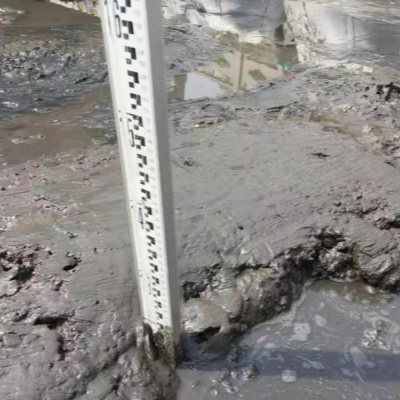
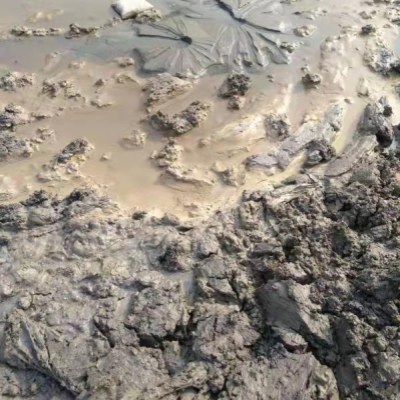
Step 1: Measure the earthwork Step 2: Determine the Mud Moisture Content
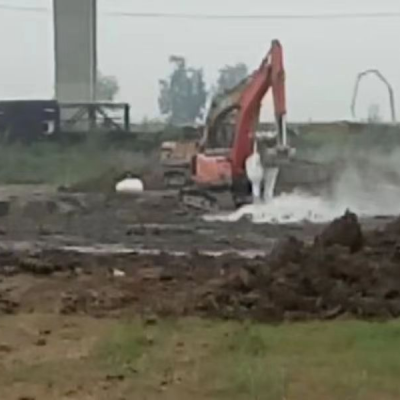
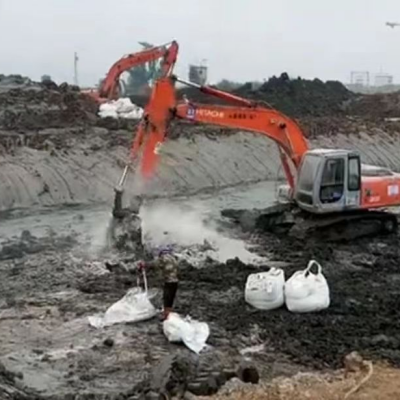
Step 3: Sprinkle the calculated cement and curing agent Step 4: Fully mix with a regular excavator
Figure 1 Construction process diagram of ordinary excavator solidification
According to the different purposes of sludge treatment, in-situ treatment or ex situ solidification treatment can be carried out. After adding the solidifying agent, in the case of a large amount of sludge, an excavator is used for stirring to ensure full contact between the solidifying agent and the sludge, and to carry out the breaking and hydration reaction; After maintenance, the mud gradually dries and hardens, and the moisture content decreases, which can meet the solidification needs of different types of mud.

图2 Figure 2 Schematic diagram of curing agent construction process
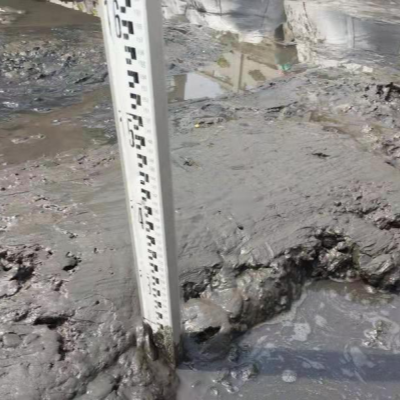
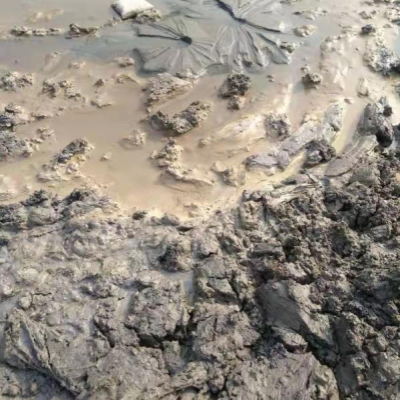
Step 1: Measure the earthwork Step 2: Determine the moisture content of the mud
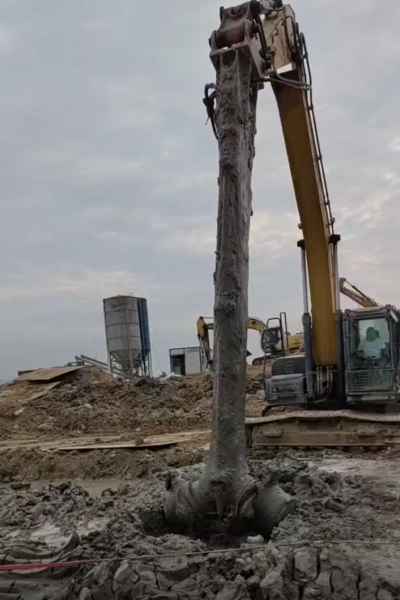
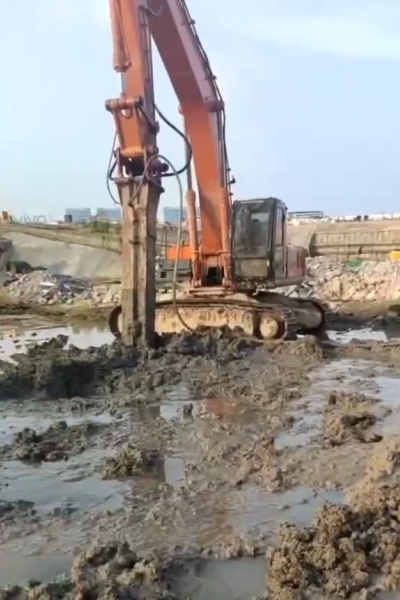
Step 3: Mix water and (cement+curing agent) in a water cement ratio of 0.8:1-1:1 for slurry making
Transported through pipelines to the excavator head for mixing and solidification
Figure 3 Construction Process of Long arm Excavator Curing
A soil slurry with a moisture content of about 80%, if it can be transported as the standard after solidification, will take about 72 hours. It takes about 3-7 days for the moisture content to decrease to around 20%; The time for other types of mud may vary. The bearing capacity can reach around 80-300KPa, and pressure curing can achieve higher strength requirements.
7.3Construction Machinery
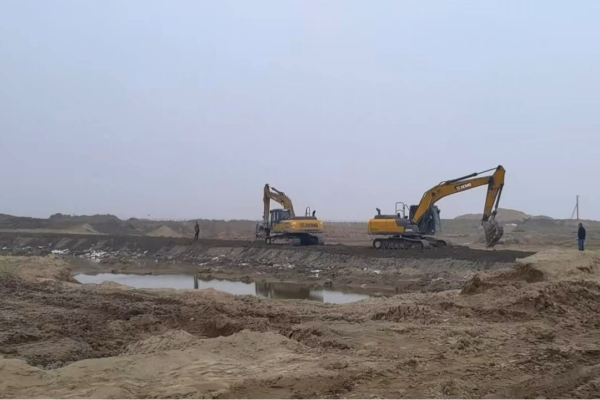
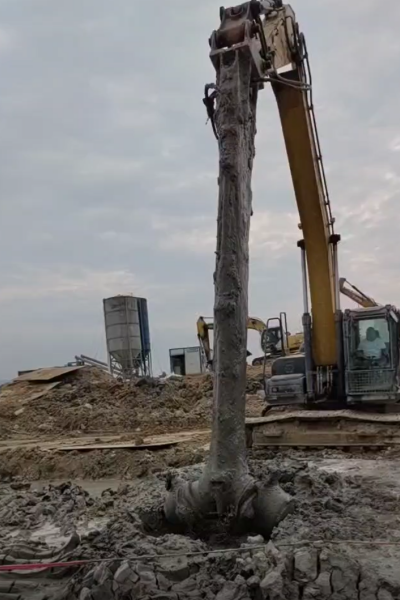
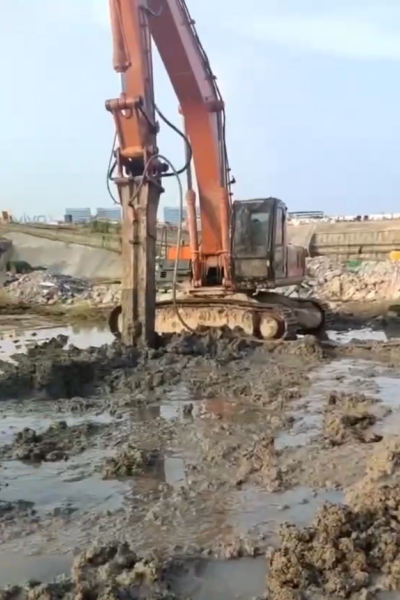
Determine the type of construction machinery based on the construction depth, and ordinary excavators can be used if the depth is not large; At a deeper level, ordinary excavators can be used to solidify layer by layer, or excavators can be paired with powerful mixer heads for construction.
7.3.1 Shallow sludge treatment using ordinary excavators
7.3.2 Deep silt is stirred using a long arm strong mixing system
八、 Product advantages
① Low operating costs: low volume, low cost, easy transportation, reduced turnover cycle, and reduced safety risks.
② Green and environmentally friendly: The solidification strength of solid waste can meet the national standard requirements, and the solidified material after treatment is waterproof and anti-seepage. It has strong stability to heavy metals and can achieve harmless and reduced treatment of sludge.
③ Accelerate the drying speed of waste: The unique advantages of this agent, such as sludge breaking, rapid loss of fluidity, rapid dehydration and drying, and high compressive strength of the treated material, are not possessed by any other solidifying agent.
④ Widely applicable: This product can be used for solidification treatment of river and pond sludge, municipal sludge, pile driving mud, tunnel construction mud, oilfield mud and rock debris, etc.
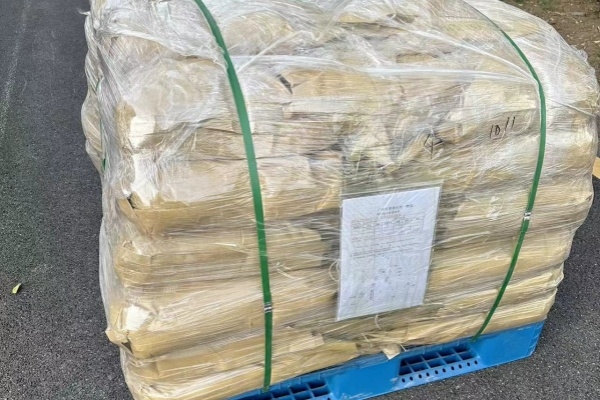
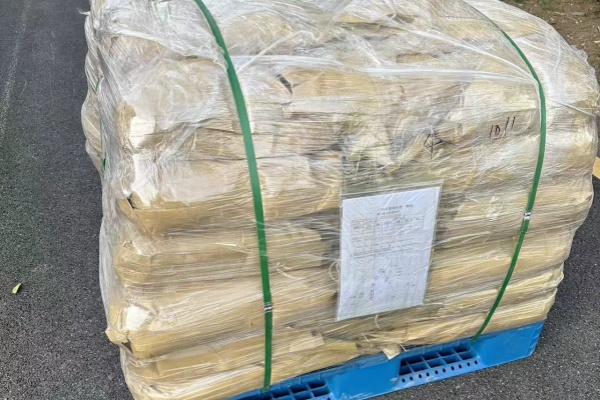
九、Packaging And Storage
Sealed storage in a cool, ventilated, and dry place, with a shelf life of 12 months. The best effect is achieved when used within 6 months.
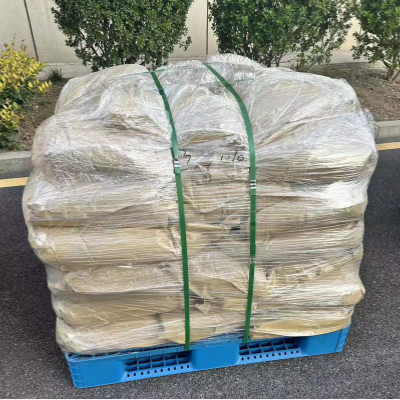
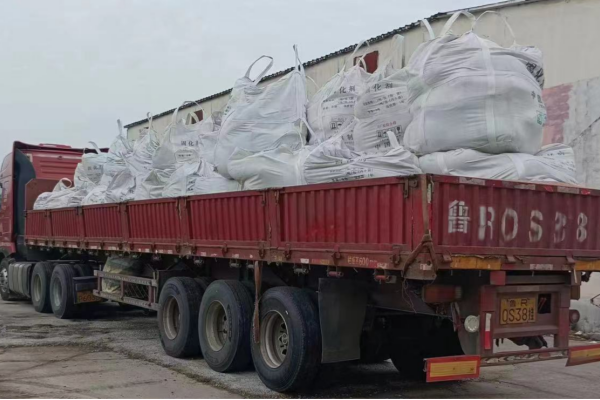
25kg/bag 1 ton/ba
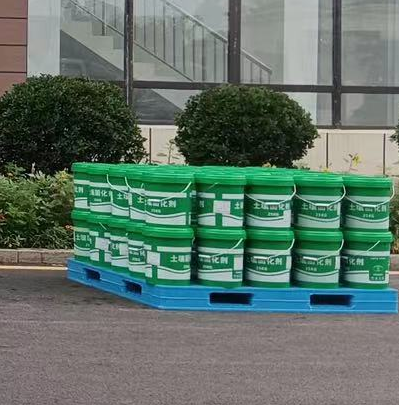
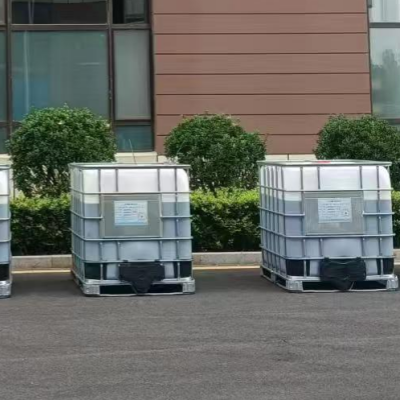
25 kilograms per barrel 1.0 ton/barrel
Figure 4: Pictures of different packaging specifications/Customizable packaging
十、Partial soft soil solidification construction case
10.1.1 African Desert Soil Softness - Road Surface Solidification
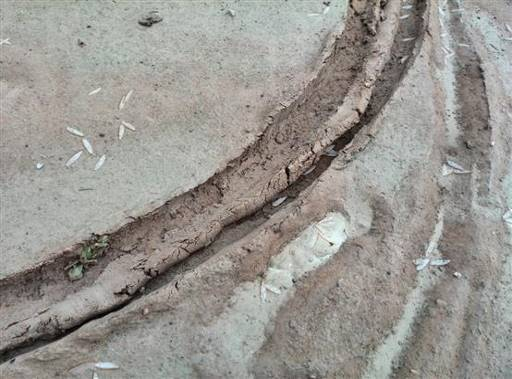
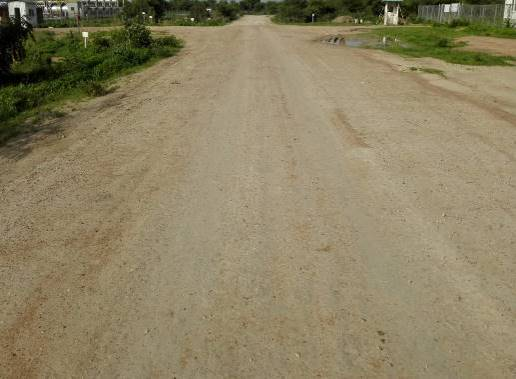
African countries - effect of solidified muddy sand road surface after 7 years of use
10.1.2
African sandy composite soil - road solidification
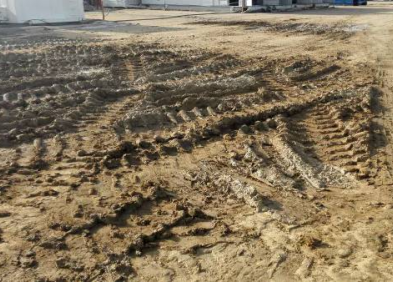
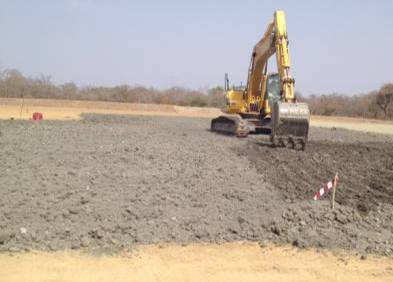
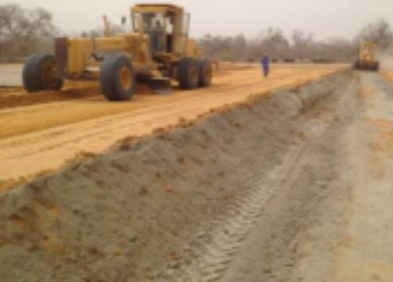
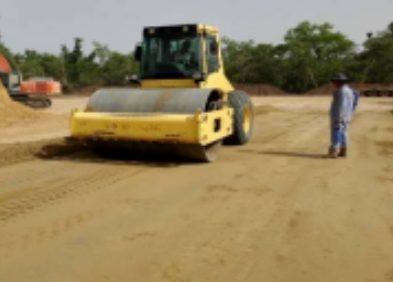
African countries - solidification of composite soil surface layer of oil field mud cuttings and sandy soil
Purchase instructions
Dear customer friend:
In order for you to better use our products and achieve better curing effects, please carefully read the following text before shipping product samples and purchasing products:
9.1 Explanation 1
All construction techniques, processes, equipment, methods, etc. related to non company products mentioned in this manual are only based on our experience and are not recommended or suggested; The specific measures are ultimately made by the material recommender, purchaser, construction party, or party A.
Our company is only responsible for the quality of our products themselves and is not responsible for any other processes or results beyond this. The final quality of its construction is closely related to the construction process. The material recommender, purchaser, construction party, or party A should make the final choice based on objective circumstances.
Please consult with our experienced technical personnel in advance to understand the material properties, dosage, dilution method, addition, and functional properties of the solidified soil, and determine the purchase intention. Please send soil samples to us for soil analysis and formula screening before purchasing.
9.2 Explanation 2
Soil in-situ solidification is a soil hardening technology that meets national industry standards. It meets specific industry design requirements with low solidification material costs and good environmental applicability, and has been widely promoted and applied under specific construction requirements. The solidified soil has outstanding effects when used as the base layer of asphalt pavement and concrete pavement. But when it comes to the use of road surface layers, they cannot be compared with asphalt pavement and concrete pavement surface layers. The two do not belong to the same application scenario and working condition, with significant differences in standards, construction costs, and usage effects.
When using the surface layer, be sure to do a good job in drainage design and timely drainage work; If subjected to long-term pressure, water accumulation, and cyclic freeze-thaw cycles, surface pulverization may occur, which is a normal phenomenon. The company does not recommend direct application to long-term high-strength pressure bearing surface layers, and prioritizes their use as base layers. It is best to cover the surface layer with a hard layer. When selecting this technology, please conduct a thorough analysis of the operating conditions.
Curing agent is an additive used in the construction of solidified soil. There are many key factors for successful solidification, including standard process design before construction, soil quality, cementitious materials, mechanical standardization, human operation, climate, and maintenance and usage methods after completion.
Please first understand the properties of solidified soil before deciding whether to purchase or carry out solidified soil construction.
The final interpretation of the content of this manual belongs to the company.
This is to clarify that!