Please read before construction of solidified soil
In-situ soil solidification is a soil hardening technology that complies with national industry standards. It can better meet specific industry design needs with its lower cost of solidification materials and environmentally friendly applicability of green mountains and clear waters. It has been well promoted and applied under specific construction requirements.
Solidified soil has outstanding effects when used as the base of asphalt pavement and concrete pavement. However, when used as road surface layer, it cannot be compared with asphalt pavement and concrete pavement surface layer. The two do not belong to the same application scenarios and working conditions. The standards are very different, the construction costs are also very different, and the use effects are not comparable.
When using it as a surface layer, be sure to do a good job in drainage design and timely drainage work; if it is exposed to long-term pressure, water accumulation, cyclic freeze-thaw and other factors, the surface will become powdery, which is normal. The company does not recommend it to be used directly as a long-term high-strength pressure-bearing surface layer. It is preferred to be used as a base layer, and the surface layer is covered with a hard layer. When choosing this technology, please do a good analysis of the usage conditions.
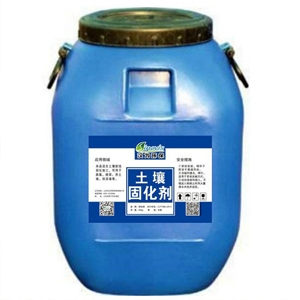
Curing agent is an auxiliary (additive) for solidified soil construction. There are many key factors for successful curing: pre-construction standard process design, soil quality, cementitious materials, mechanical standardization, human operation, climate and post-completion maintenance and use methods, etc.
Please understand the properties of solidified soil before choosing whether to carry out solidified soil construction.